EBA RIO DE JANEIRO 2026

06 - 09/10/2026

SPEAKERS

EBA 2026 | Rio de Janeiro

06 - 09/10/2026

Alexandre Ferreira

Alexandre Ferreira

Electrifying Adsorption Processes: New Regeneration Strategies for CO₂ Capture and Water Harvesting
Arvind Rajendran

Arvind Rajendran

The Challenge of CO2/H2O Co-adsorption for Point-Source and Direct Air Capture

Benoît Coasne

Benoît Coasne

Adsorption at Interfaces and Contact Lines: From Molecular Oversolubility to Macroscopic Wetting

Diana Azevedo

Diana Azevedo

Sorbents and process intensification to advance in CO2 capture and utilization

Fateme Rezaei

Fateme Rezaei

Advancements in Magnetic Sorbents and Magnetically Induced Swing Adsorption

Gennady Gor

Gennady Gor

When Pollutants Travel Together: The Role of Microplastics in Transporting Contaminants

Matthias Thommes

Matthias Thommes

Effect of Confinement on the Adsorption, Phase and Wetting Behaviour of
Fluids: Recent Progress in the Pore Network and Surface Characterization of
Nanoporous Materials

Sibele Pergher

Sibele Pergher

Molecular Sieves: Engineering Porosity for Efficient Adsorption and Chemical Conversion

KEYNOTES SPEECHES

Amelie Claire Rochet

Amelie Claire Rochet

Laboratório Nacional de Luz Síncronton

Unravelling Adsorption and Reaction Mechanisms in Heterogeneous Catalysis with XAS and BCDI
André Muniz

André Muniz

Universidade do Federal do Rio Grande do Sul – UFRGS

Exploring alternative techniques to study diffusion and adsorption in nanoporous materials using molecular dynamics simulations.

Helen Ferraz

Helen Ferraz

Universidade do Federal do Rio de Janeiro – UFRJ

From Fundamentals to Application -: Adsorption as the Universal Language of Interfacial Engineering

Idelfonso Nogueira

Idelfonso Nogueira

Norwegian University of Science and Technology – NTNU

Artificial Intelligence for Adsorption-based Processes

Karen Valverde Pontes Vater

Karen Valverde Pontes Vater

Universidade Federal da Bahia – UFBA

Enhancing adsorption process understanding by model based strategies

Leandro Gurgel

Leandro Gurgel

Universidade Federal de Ouro Preto – UFOP

From milligrams to tens of grams: Challenges in scaling up adsorbent technologies

Lucas Meili

Lucas Meili

Universidade Federal de Alagoas – UFAL

Lamellar Materials as Adsorbents: Advances, Limitations and Perspectives

Luciano Costa

Luciano Costa

Universidade Federal Fluminense – UFF

The revolution of matter simulation applied to adsorption: Accelerating the discovery of new adsorbents.

Lucienne Romanielo

Lucienne Romanielo

Universidade Federal de Uberlândia – UFU

Transferable Force Fields for Porous Materials: Is it a Possible Dream?

Luiz Fernando Mecier

Luiz Fernando Mecier

Universidade Estadual de Campinas – UNICAMP

Adsorption at different scales: from molecules to process

Marcos Juliano Prauchner

Marcos Juliano Prauchner

Universidade de Brasília – UNB

Rational design of activated carbons: aligning the synthesis methodology with the target application

Marisa Masumi Beppu

Marisa Masumi Beppu

Universidade Estadual de Campinas – UNICAMP

Adsorption: From Separation Processes to Understanding Biological Interfaces

Maurício Alves de Motta Sobrinho

Maurício Alves de Motta Sobrinho

Universidade Federal de Pernambuco – UFP

Graphene: a Multifuntional Plataform

Moisés Bastos Neto

Moisés Bastos Neto

Universidade Federal do Ceará – UFC

From Natural Gas to Hydrogen: An Adsorption Journey Through Energy Storage

Nathália Salles

Nathália Salles

Universidade do Estado do Rio de Janeiro – UFRJ

When Pollutants Travel Together: The Role of Microplastics in Transporting Contaminants

Alexandre Ferreira

Alexandre Ferreira

Electrifying Adsorption Processes: New Regeneration Strategies for CO₂ Capture and Water Harvesting
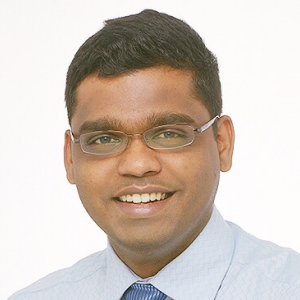
Arvind Rajendran

Arvind Rajendran

The Challenge of CO2/H2O Co-adsorption for Point-Source and Direct Air Capture
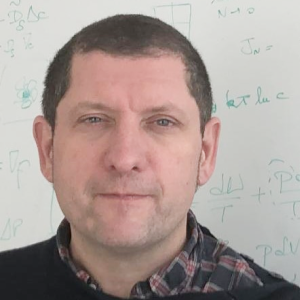
Benoît Coasne

Benoît Coasne

Adsorption at Interfaces and Contact Lines: From Molecular Oversolubility to Macroscopic Wetting
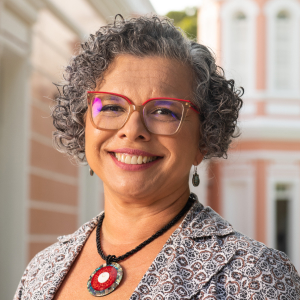
Diana Azevedo

Diana Azevedo

Sorbents and process intensification to advance in CO2 capture and utilization
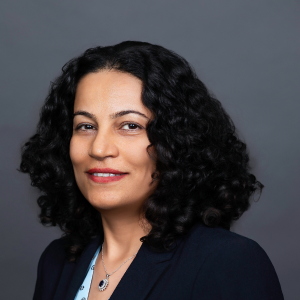
Fateme Rezaei

Fateme Rezaei

Advancements in Magnetic Sorbents and Magnetically Induced Swing Adsorption
Gennady Gor

Gennady Gor

Electrifying Adsorption Processes: New Regeneration Strategies for CO₂ Capture and Water Harvesting

Matthias Thommes

Matthias Thommes

Electrifying Adsorption Processes: New Regeneration Strategies for CO₂ Capture and Water Harvesting

Sibele Pergher

Sibele Pergher

Molecular Sieves: Engineering Porosity for Efficient Adsorption and Chemical Conversion

Nathália Salles

Nathália Salles

When Pollutants Travel Together: The Role of Microplastics in Transporting Contaminants
André Muniz

André Muniz

Exploring alternative techniques to study diffusion and adsorption in nanoporous materials using molecular dynamics simulations.
Lucienne Romanielo

Lucienne Romanielo

Transferable Force Fields for Porous Materials: Is it a Possible Dream?
Luciano Costa

Luciano Costa

Sorbents and process intensification to advance in CO2 capture and utilization

Moisés Bastos Neto

Moisés Bastos Neto

From Natural Gas to Hydrogen: An Adsorption Journey Through Energy Storage
Maurício Motta

Maurício Motta

Graphene: a Multifuntional Plataform
Karen Valverde

Karen Valverde

Enhancing adsorption process understanding by model based strategies
Helen Ferraz

Helen Ferraz

From Fundamentals to Application -: Adsorption as the Universal Language of Interfacial Engineering
Luiz Fernando Mecier

Luiz Fernando Mecier

Adsorption at different scales: from molecules to process
Marcos Prachner

Marcos Prachner

Rational design of activated carbons: aligning the synthesis methodology with the target application
Idelfonso Nogueira

Idelfonso Nogueira

Artificial Intelligence for Adsorption-based Processes
Marisa Beppu

Marisa Beppu

Adsorption: From Separation Processes to Understanding Biological Interfaces
Amelie Claire Rochet

Amelie Claire Rochet

Laboratório Nacional de Luz Síncronton
Unravelling Adsorption and Reaction Mechanisms in Heterogeneous Catalysis with XAS and BCDI
Leandro Gurgel

Leandro Gurgel

Universidade Federal de Ouro Preto – UFOP

From milligrams to tens of grams: Challenges in scaling up adsorbent technologies
Lucas Meili

Lucas Meili

Universidade Federal de Alagoas – UFAL

Lamellar Materials as Adsorbents: Advances, Limitations and Perspectives
LECTURERS - ADSORPTION SCHOOL

Elaine Felix

Elaine Felix

Universidade Federal Rural do Rio de Janeiro – UFRRJ
Raman Spectroscopy and Surface-Enhanced Raman Scattering (SERS) in the Context of Adsorption: Theory and Instrumentation
Felipe Cunha

Felipe Cunha

Universidade do Federal do Rio de Janeiro – UFRJ
From Isotherm to Process: Fundamentals, Modeling, and Experimental Techniques
Felipe Pinto

Felipe Pinto

Universidade do Federal do Rio de Janeiro – UFRJ

From Isotherm to Process: Fundamentals, Modeling, and Experimental Techniques

Helen Ferraz

Helen Ferraz

Universidade do Federal do Rio de Janeiro – UFRJ

Adsorption in Nanostructured Biosensors: Fundamentals and Applications

Idelfonso Nogueira

Idelfonso Nogueira

NTNU

Domain-Informed AI for Adsorption: From Hybrid Models to Foundation Models
Igor Pereira

Igor Pereira

 UFRJ

Fundamentals and Applications of cDFT in Adsorption: From Classical Modeling to 1D and 3D Molecular Simulation

Lucienne Romanielo

Lucienne Romanielo

UFRJ

Using Cassandra to Predict Adsorption in Porous Materials

Luiz Mecier

Luiz Mecier

UNICAMP

Computing Transport Properties in Confined Media

Nathalia Salles

Nathalia Salles

UERJ

Connecting Free Energy and Adsorption: Calculating Henry’s Constants through Molecular Simulation
Rafael Cavalcante

Rafael Cavalcante

UFRJ

Preparative Chromatography Systems: Modeling, Technology, and Applications
Rui Vieira

Rui Vieira

UFRJ

Sizing Preparative Chromatography Columns: A Practical Approach to Estimating Dynamic Binding Capacity (DBC)
Vitor Sermoud

Vitor Sermoud

 UFRJ

Fundamentals and Applications of cDFT in Adsorption: From Classical Modeling to 1D and 3D Molecular Simulation

SPEAKERS

Alexandre Ferreira

Title:  – Electrifying Adsorption Processes: New Regeneration Strategies for CO₂ Capture and Water Harvesting


Short Bio:

–  Alexandre Ferreira is an Assistant Professor at the Faculty of Engineering of the University of Porto (FEUP), with recognized expertise in adsorption and cyclic separation processes. He holds a Ph.D. in Chemical Engineering from TU Delft and has held research positions at Imperial College London, the University of Amsterdam, and Delft University of Technology, where he was also involved in coordinating major European research initiatives.

His research focuses on cyclic adsorption and reaction processes, CO₂ capture, water harvesting, and advanced sorbent materials, with applications spanning chemical industry, energy, and environment. He has authored over 100 peer-reviewed publications, with an h-index of 37, and has received multiple distinctions for scientific excellence from FEUP. He has coordinated and participated in several competitive national and European projects, including Horizon Europe, EDF, and FCT-funded initiatives, and has led numerous industry collaborations with international partners.

Alexandre Ferreira is an active scientific leader in the adsorption community, serving as Chair of RIA 2024 and Co-Chair of FOA 2025. He is also deeply committed to teaching and academic service, having received repeated pedagogical excellence awards and holding several leadership roles within FEUP.

SPEAKERS

Fateme Rezaei

Short Bio

Dr. Rezaei is Professor of Chemical Engineering in the Chemical, Environmental and Materials Engineering Department at University of Miami. She obtained her PhD degrees in Chemical Engineering from Monash University in Australia and LTU in Sweden in 2011. Her research focus broadly lies at the interface of chemical, materials science and environmental engineering, and the overall goal of her research group is development of advanced adsorbent materials and adsorption processes for separation, purification, and storage applications.

Rezaei’s research has been supported by National Science Foundation (NSF), National Aeronautics and Space Administration (NASA), department of Energy (DOE), and department of Defense (DOD). She is the author of over 150 peer-reviewed journal articles and has received several awards including 2024 ACS ENFL Emerging Researcher. She is currently the Associate Editor of ACS Energy & Fuels journal.

SPEAKERS

Gennady Gor

Short Bio:

Dr. Gennady Gor is an Associate Professor of Chemical and Materials Engineering at the New Jersey Institute of Technology (NJIT). He earned his Ph.D. in Theoretical Physics from St. Petersburg State University in 2009 and conducted postdoctoral research at Rutgers University, Princeton University, and the U.S. Naval Research Laboratory before joining NJIT in 2016. Dr. Gor leads a research group that integrates molecular simulations, theory, and experiments to study the interactions of fluids with porous and soft materials. His current work spans confined liquids and electrolytes, atmospheric aerosols, and ultrasound propagation in porous media. He is the author of more than 80 peer-reviewed publications, a recipient of the NSF CAREER Award (2020), and serves as Associate Editor of the journal Adsorption.

SPEAKERS

Arvind Rajendran

Short Bio:

Arvind Rajendran is a professor of Chemical Engineering at the University of Alberta. After completing his PhD from ETH Zurich, Arvind began his academic career at Nanyang Technological University in Singapore and has been with the University of Alberta since 2012. Arvind has co-authored over 100 papers and supervised more than 50 MSc, PhD, and postdoctoral researchers. His research group focuses on adsorptive gas separations, including applications in CO2 capture, direct air capture, oxygen purification, and helium separation. Arvind serves as the secretary of the International Adsorption Society (IAS).

SPEAKERS

Benoît Coasne

Short Bio:

Benoit Coasne is an expert in the physics and physical chemistry of adsorption and transport in nanoporous materials. After his PhD in Paris (2003) and a 2 year postdoc in the USA (2003-2004), he was appointed CNRS researcher in Montpellier in 2005 and promoted CNRS Res. Director in 2015. During a 3 year visiting stay as joint Visiting Professor/CNRS Res. Director, he was leading a group on multiscale modeling of adsorption and transport in the CNRS/MIT lab at MIT in Boston (2012/15). He is currently affiliated in the Interdisciplinary Physics Lab in Grenoble. He is also (1) an Affiliate Member of the ILL Theory Group at Institut Laue Langevin (European Neutron Source) where he is in charge of Soft Matter Theory, (2) Deputy Director of the LabCom CARMEN2 on materials for new energies, and (3) Adjunct Professor at Univ. Maryland in the USA.  He is the chair of the Conference MATERIAUX 2026 (1500 people in Grenoble, Nov. 2026). Benoit Coasne was Cofounder and first President of the French Adsorption Society. He is now President of the Chemical Physics Division (SFP/SCF) and President of the FRA/GER adsorption initiative. Benoit Coasne’s research on adsorption, confinement, and phase transitions in porous materials covers a broad range of confined systems from atoms, molecular fluids, electrolytes/ionic liquids, and solids. He published ~240 papers including 3 Nature Materials, 6 Nature Comm., 2 Chem. Soc. Rev, 1 Chem. Rec., 2 Proc. Nat. Acad. Sci., 3 ACS Nano, 3 Phys. Rev. Lett., 3 J. Phys. Chem. Lett.

SPEAKERS

Sibele Pergher

Short Bio:

Dr. Sibele Berenice Castellã Pergher is a Professor at the Federal University of Rio Grande do Norte (UFRN), Brazil, where she works in the Petroleum Chemistry undergraduate program and in the Graduate Programs in Chemistry and Materials Science and Engineering. 

Her research focuses on the synthesis of catalysts and advanced porous materials, including zeolites, clays, mesoporous, lamellar, pillared, and delaminated materials, as well as adsorption and catalytic processes. She is the founder and coordinator of the Molecular Sieves Laboratory (LABPEMOL).

Dr. Pergher has held several leadership positions, including Director of the Brazilian Catalysis Society (SBCat) and Vice President for Research at UFRN. She is actively involved in the international catalysis community, serving on the Synthesis Commission and Board of the International Zeolite Association (IZA), and representing Brazil in the Ibero-American Federation of Catalysis (FISOCAT) and in the International Association of Catalysis Societies (IACS).

SPEAKERS

Diana Azevedo

Short Bio:

Title: Sorbents and process intensification to advance in CO2 capture and utilization 

Full Professor in Chemical Engineering at Universidade Federal do Ceará (UFC, Brazil) since 2012 and faculty member of Chemical Engineering Department since 1993. She currently holds the position of vice-president of UFC (2023-2027). Research grantee level A at CNPq, with h-index 47 (Scopus). Her present research interests include CCUS and hydrogen storage. She is a member of the Editorial Board of Kirk-Othmer Encyclopedia of Chemical Engineering (Wiley), Adsorption and the Chemical Engineering Journal. She is a Fellow of the International Adsorption Society (IAS), member of its board of directors and member of the National Engineering Academy (ANE). For the last ten years, she has been actively engaged in gender balance initiatives in higher education, particularly in STEM.

SPEAKERS

Matthias Thommes

Short Bio:

Matthias Thommes is currently full Professor and Head, Institute of Separation Science and Technology at the Department of Chemical and Biological Engineering at the Friedrich-Alexander Universität Erlangen-Nürnberg (FAU) and holds also an Honorary Professorship at University of Edinburgh, U.K..

Matthias received his Doctorate in Physical Chemistry in 1993 at the Technical University Berlin (1992/93). From 1992 to 1995 he was a project scientist for a microgravity experiment on critical adsorption, which was carried out on the EURECA mission of the European Space Agency (ESA). In 1996, he moved to the USA as an ESA fellow and postdoctoral research associate at the Institute for Physical Science and Technology at the University of Maryland at College Park, USA. In 1998, he joined Quantachrome and was Scientific Drector of Quantachrome Corp. (Boynton Beach, FL, USA ) from 2001 until June 2018. Since July 1st 2018, he is full Professor and Head of the Institute for Separation Science and Technology, at FAU and served also as Head of Department Department of the Chemical and Bioengineering department from 2021-2023. In addition, he holds prestigious leadership positions in a number of authoritative bodies associated with adsorption and characterization science

Matthias Thommes’ work involves investigating the adsorption, phase and wetting behavior of fluids in nanoporous materials, developing methodologies for a targeted  nanoporous material characterization for various application including separation, catalysis, gas-and energy storage. 

His research forms a link between the adsorption properties of adsorbents and their characteristics with the development of nanoporous materials and their use in various processes. Matthias has an h-index of 67 with 56800+ citations (Google Scholar, May 2026)

Matthias Thommes has received numerous recognitions for his work, among them for instance  the  induction as a Fellow of the International Adsorption Society (IAS) in 2021, a dedicated  Honorary Session in his name at the 2024 AIChE (American Institute of Chemical Engineers) annual meeting (San Diego) for his outstanding achievements in the area of fundamentals of adsorption and porous materials characterization, and most recently the prestigious Clarence (Larry) Gerhold Award, one of the most significant accolades in the field of chemical separations technologies.